Wispr Flow’s India bet shows voice AI is moving beyond English-first tech | FOMO Daily
14 min read
Wispr Flow’s India bet shows voice AI is moving beyond English-first tech
Wispr Flow’s India launch shows how voice AI is moving beyond clean English dictation and into the harder world of Hinglish, mobile-first users, and real multilingual speech. The opportunity is large, but the product must prove it can handle India’s language habits, pricing reality, trust issues, and everyday workflows.
The real test for voice ai is not in Silicon Valley
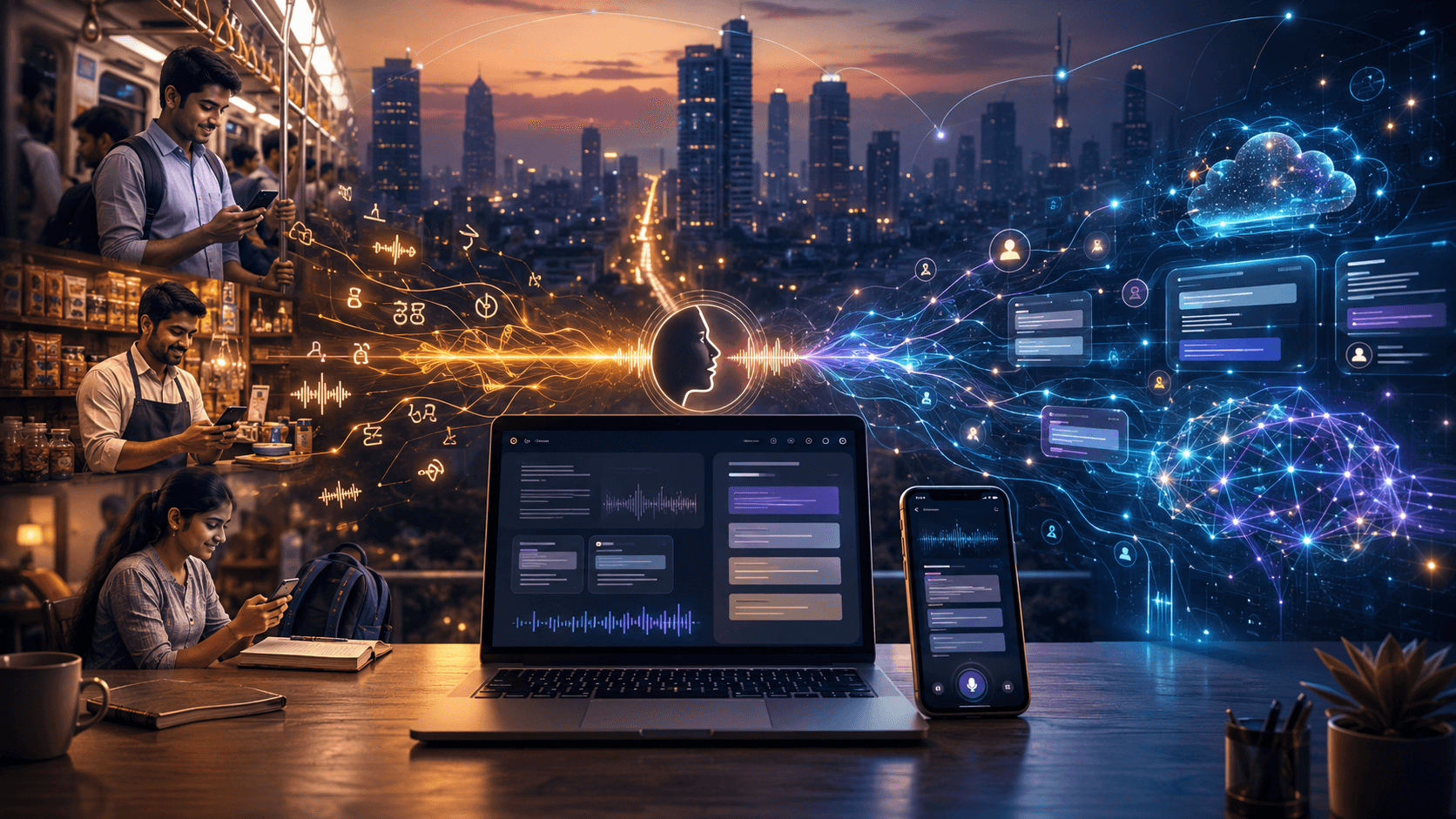
Wispr Flow’s move into India is not just another startup expansion story. It is a test of whether voice AI can leave the comfort of polished English demos and work in the messier world where people switch languages mid-sentence, speak with regional accents, use slang, talk fast, pause badly, and expect the app to understand them anyway. The company has officially pushed into India with support for Hinglish, Android access, and India-specific pricing, which makes the move look simple from the outside. But the deeper story is harder. India is one of the biggest digital markets on earth, but it is also one of the most demanding places to build voice technology because language does not behave neatly there. People do not always speak pure Hindi, pure English, pure Tamil, pure Marathi, or pure Telugu. They blend. They jump. They shorten words. They speak how real people speak, not how product teams wish they spoke. That is why this launch matters. If voice AI can work properly in India, it starts to look less like a premium productivity tool and more like a new way for people to use computers, phones, apps, and work software without being trapped behind a keyboard. Wispr Flow’s India push is still early, and it should not be treated as proof of victory. But it is a serious signal that the next phase of AI input may be built around speech, not typing.
The old digital world was built around the keyboard. Even mobile apps, which were supposed to make everything easier, still force people to tap little glass squares all day. That works fine for people who are comfortable typing in English, sitting at a desk, or writing in a formal tone. It does not work as well for people moving between buses, kitchens, warehouses, shops, clinics, classrooms, and family chats. The keyboard assumes patience. Voice assumes urgency. That is the quiet shift underneath Wispr Flow’s India launch. A good voice tool is not only about dictating a note faster. It is about changing the input layer of computing. Instead of thinking, typing, deleting, retyping, and fixing tone, the user can speak naturally and let the system clean the sentence into something usable. Wispr Flow markets itself around that idea, saying its product turns speech into polished writing across apps and devices, with support across Mac, Windows, iPhone, Android, and more than 100 languages. That promise is powerful, but India adds pressure because the user may not speak in one clean language at a time. The problem is that old dictation systems were often built for slow, careful, standard speech. Real life is not like that. Real users mumble, change direction, use filler words, and mix languages because that is how humans actually communicate.
Latest
Top Picks
The latest industry news, interviews, technologies, and resources.
AI terms like LLMs, hallucinations, prompts, tokens, RAG, and agents are moving from technical circles into everyday work and public life. Understanding them now matters because AI tools are becoming part of search, business, education, software, media, and decision-making.
India is attractive to AI companies because the market is enormous, mobile-first, and digitally active. But that size comes with complexity. DataReportal estimated that India had 806 million internet users at the start of 2025, while more recent reporting on internet adoption points to India’s active internet base moving well beyond 900 million users. Nielsen’s India Internet Report 2025, as reported by industry media, estimated more than 915 million active internet users, with nearly 94% accessing the internet through mobile data and more than 622 million smartphone users. Those numbers explain why India is so tempting for a voice-first product. The country is full of people using phones as their main computer. The important part is not just how many people are online. It is how they are online. A mobile-first user does not always want to type a long email, product note, school message, business reply, or customer update. Speaking is often faster and more natural, especially when people are already comfortable using voice search, voice notes, and messaging apps. But scale does not guarantee adoption. A tool can have a huge market and still fail if it misunderstands local speech. India gives Wispr Flow a giant opportunity, but it also removes the luxury of pretending English-first design is enough.
Hinglish is not just a cute local twist. It is a serious product challenge. When people move between Hindi and English in the same sentence, they are not being careless. They are communicating naturally. In many workplaces, homes, colleges, and online communities, switching between languages is normal. A person might use English for work terms, Hindi for feeling, English for tech words, and local phrasing for emphasis. If a voice AI tool treats that as a mistake, it breaks the flow. Wispr Flow’s India launch specifically includes Hinglish support, and that is the heart of the bet. It is trying to meet users where their speech already lives instead of forcing them to clean themselves up for the machine. That sounds simple, but it is hard because the model must understand mixed vocabulary, mixed grammar, local accents, and the user’s intent. It must also decide what the final written output should look like. Should the result stay casual? Should it become polished English? Should it preserve the mixed-language flavour? Should it clean filler words without removing meaning? This is where voice AI becomes more than transcription. It becomes interpretation. The bottom line is that Hinglish support is not a marketing garnish. It is the doorway to whether the product feels useful or foreign.
Android matters because India is mobile-first
The Android piece matters because India is not a Mac-first market. A voice AI product that only works well on desktop would miss a large part of everyday usage. Wispr Flow’s Android app launched earlier in 2026, and reports described it as a product that can work across other apps and support translation in more than 100 languages. For India, the Android layer is especially important because many users live inside messaging apps, email apps, workplace tools, search, forms, and social platforms. If voice AI is trapped inside one app, it becomes another destination. If it floats across apps, it starts to feel like infrastructure. That is the real difference. The company’s India launch also highlighted an Android app with a floating button for dictation, which fits the way mobile users actually work. You do not want to stop everything, open a separate app, dictate, copy, paste, and fix. You want to speak where you already are. That is why mobile voice input could become more important than desktop dictation in markets like India. But the pressure is higher too. Android devices vary widely. Network quality varies. Background noise varies. User patience is thin. A voice tool has to work quickly enough that people trust it. If it adds friction, users will go back to typing, tapping, or sending raw voice notes.
Local pricing shows the company knows the market is different
Wispr Flow’s India pricing is one of the clearest signs that the company understands India cannot be treated like a simple copy-and-paste of the U.S. market. The company introduced India-specific pricing in December at ₹320 per month on annual plans, far below its standard global monthly price of $12, according to TechCrunch. That is not just a discount. It is a recognition that productivity software pricing has to match local willingness to pay, local competition, and local usage habits. In India, a voice AI tool may need to appeal not only to startup workers and executives, but also to students, creators, sales teams, small businesses, support staff, and everyday mobile users. A high U.S.-style subscription can narrow the market before the product has a chance to prove itself. The lower price does not guarantee adoption, but it removes one obvious barrier. The bigger question is whether users will pay for better speech-to-text when free built-in dictation, keyboards, voice notes, and messaging shortcuts already exist. To win, Wispr Flow has to be meaningfully better, not just slightly nicer. It must save time, reduce editing, handle messy speech, and work across the apps people use every day. In a price-sensitive market, usefulness has to be obvious.
The deeper shift is that voice AI is no longer just about turning sound into words. Old dictation tools acted like stenographers. They listened and wrote down what they heard, mistakes and all. Newer tools are trying to act more like writing assistants. They remove filler words. They shape sentences. They fix grammar. They turn rambling speech into something closer to a message, note, email, or document. Wispr Flow’s own product positioning leans heavily into this idea, saying it cleans up what the user says rather than simply dumping raw speech into text. That matters because real speech is messy. When people talk, they repeat themselves, change direction, leave sentences half-built, and use tone to carry meaning. Writing does not forgive that as easily. A useful AI voice product has to bridge the gap between how humans speak and how written communication is expected to look. In India, that gap can be even wider because the user may be thinking in one language, speaking in a mix, and wanting the final output in a cleaner format. That is not ordinary transcription. It is a quiet form of translation between thought, speech, and polished text. If this works, the keyboard becomes less central. If it fails, voice remains a novelty.
The enterprise angle could be bigger than casual use
Consumer adoption gets attention, but the business angle may be just as important. TechCrunch reported that Wispr Flow has hired Nimisha Mehta to lead India operations and plans to grow to around 30 employees in India over the next year, building consumer growth, partnerships, and enterprise teams alongside existing engineering and support. The company currently has about 60 employees globally, according to the same report. That hiring direction matters because enterprise use cases can be clearer than casual use. Sales teams write follow-ups. Doctors and clinic workers record notes. Support teams answer customers. Field staff update systems. Managers send long messages. Founders write memos. Recruiters summarise calls. In all those cases, speaking may be faster than typing, especially on mobile. But enterprise customers will ask harder questions. They will care about security, privacy, admin controls, integrations, reliability, language accuracy, and whether the tool works across the software they already use. The opportunity is large, but it is not automatic. A fun consumer tool can get away with a few rough edges. A business tool cannot keep making mistakes in customer messages, legal notes, medical records, financial workflows, or sensitive internal communication. That is where India becomes both a growth market and a stress test.
The competition is not just other startups
Wispr Flow is not only competing with other voice AI startups. It is competing with built-in phone dictation, Google services, Apple dictation, keyboard apps, WhatsApp voice notes, office software, transcription tools, and the simple habit of typing. That is a tough field because users already have free options. The problem is that free options are often good enough for basic use. A paid product has to create a clear gap. It has to be faster, more accurate, more natural, more private, more polished, or more useful across different apps. In India, it also has to handle accents and code-switching better than generic systems. This is where the “voice AI is hard” part becomes real. Users do not judge voice tools by lab benchmarks. They judge them by frustration. If the app gets names wrong, misunderstands local phrases, breaks Hinglish, inserts awkward punctuation, or turns casual speech into strange corporate language, people will stop using it. Voice products have a low tolerance for embarrassment. When typing fails, the user blames themselves. When dictation fails, the user blames the machine. That makes trust harder to build. Wispr Flow’s challenge is not only to launch in India. It is to become reliable enough that users stop thinking about the tool at all.
India’s language diversity is not a small technical detail. The Indian Constitution’s Eighth Schedule lists 22 languages, and that does not capture the full depth of regional speech, dialects, accents, and mixed-language habits across the country. Wispr Flow says it already supports dictation in more than 100 languages, and TechCrunch reported that the company plans to expand multilingual support over the next 12 months so users can switch between English and other Indian languages beyond Hindi while speaking. That is where the real mountain begins. Supporting many languages on a feature list is one thing. Handling them naturally in the same spoken flow is another. A user may start in English, shift to Hindi, add a local-language phrase, return to English for a work term, and expect the output to make sense. This is not only a speech-recognition challenge. It is a context challenge. The system has to understand not just words, but intent. It has to know when to preserve a phrase and when to clean it. It has to respect names, places, slang, and tone. That is why India may become one of the most important testing grounds for voice AI. If the product can survive there, it becomes much more credible everywhere else.
The privacy question cannot be ignored
Voice AI also brings a trust problem that typing does not always carry in the same way. When people speak, they reveal more than words. They reveal tone, emotion, background context, sometimes other people’s voices, and often private information they would not want floating around loosely. A voice AI app that works across devices and apps becomes powerful, but power always brings responsibility. Users will want to know what is recorded, what is stored, what is processed, whether audio is retained, how transcripts are handled, and whether sensitive data is used for model improvement. Businesses will ask even harder questions because workplace speech can include customer details, contracts, financial information, health data, or internal strategy. This is not a reason to reject voice AI. It is a reason to treat trust as part of the product, not a legal page at the bottom of a website. India’s digital market is huge, but users and regulators are increasingly aware of privacy, security, and consent issues around mobile software. The important part is that voice AI cannot win by being clever alone. It has to feel safe. If people are going to speak their work, thoughts, messages, and customer notes into a system, they need confidence that the system is not quietly creating a new risk. That is where responsible growth will matter as much as speed.
The real story is not just Wispr Flow. The real story is that the way people use computers may be changing. For decades, the keyboard was the main doorway into software. Then touchscreens made computing easier, but they still kept people tapping and swiping. Voice may be the next doorway, especially in places where mobile is the main device and language habits are more fluid than old software assumed. The promise is simple: say what you mean, and the machine turns it into useful written output. That sounds small until you think about the time people spend typing messages, reports, notes, replies, prompts, search queries, and forms. If voice AI becomes reliable, it could change productivity for workers who are not traditional desk workers. It could help people who think faster than they type. It could make digital tools easier for older users, multilingual users, and first-time internet users. But the product has to earn that future. Voice has disappointed before because it was clunky, embarrassing, or inaccurate. The new generation has better models and better context handling, but the user will not care about model architecture. The user will care whether the sentence comes out right. That is the only benchmark that matters in the end.
What changes next
What changes next is that India becomes a serious proving ground for voice-first AI products. Wispr Flow’s local launch gives it a chance to test pricing, language support, Android behaviour, enterprise demand, and everyday consumer habits in one of the world’s most complex markets. The next signals to watch are simple. Does the product keep growing after the launch buzz fades? Does Hinglish support feel natural enough for daily use? Does multilingual switching expand beyond Hindi in a way that real users trust? Do businesses adopt it for serious workflows? Does the company build enough local support and partnerships to understand the market properly? And does pricing stay low enough to make the product feel practical rather than premium? The bottom line is that voice AI in India is not easy, but that is exactly why it matters. Easy markets produce polished demos. Hard markets produce durable products. If Wispr Flow can make voice input feel natural in India, it will prove something bigger than one startup’s launch. It will prove that AI productivity tools can move past English-first assumptions and start working for the way the world actually speaks.
The CLARITY Act is moving toward a May 14 Senate Banking Committee markup, and the biggest fight is over stablecoin rewards. Banks fear deposit flight, crypto firms want room to compete, and lawmakers are trying to define the next rulebook for digital finance.


-640x427.png&w=3840&q=75)
-640x427.png&w=3840&q=75)
-300x200.png&w=3840&q=75)
-300x200.png&w=3840&q=75)
-300x200.png&w=3840&q=75)
-4-300x200.png&w=3840&q=75)

-3-300x200.png&w=3840&q=75)

-2-300x200.png&w=3840&q=75)
-2-300x200.png&w=3840&q=75)